
Once your website’s foundation is ready, it’s time to focus on On-Page SEO – the process of optimizing individual pages to improve their visibility and relevance in search engines.
This step is where your content, keywords, and technical elements come together to help your pages rank higher and attract more organic traffic.
Content That Ranks
Search engines aim to deliver helpful, relevant, and high-quality content to users. On-Page SEO ensures your content is structured and optimized for both search engines and human readers.
Good On-Page SEO combines:
- Smart keyword usage
- Clear formatting and structure
- Internal linking
- Engaging, valuable content
Let’s break it down step by step.
Content Planning
Before you start writing, create a clear content plan based on your niche and keyword research (from Step 1).
A solid plan helps you:
- Organize your topics
- Target the right search intent
- Avoid duplicate or overlapping posts
Content Silos & Topic Clusters
Think of your website as a library, each main topic (silo) is a category, and the related posts are chapters.
Creating content silos or topic clusters helps Google understand your site’s structure and authority.
Example:
If your niche is Phlebotomy Training, your silos could be:
Training & Courses (pillar)
- What Is a Phlebotomy Course?
- How to Get Certified in the UK
- Advanced Phlebotomy Techniques
Career Guide (pillar)
- Phlebotomist Salary in the UK
- How to Gain Work Experience
Each pillar page should link to its related subtopic articles, and those subtopics should also link back to the pillar page. Creating a connected network of internal links that strengthens your site’s overall SEO structure.
This linking pattern helps search engines understand the relationship between your main topics and supporting content.
- It passes link authority from high-ranking pages to newer or smaller posts.
- It improves user navigation, keeping readers engaged longer.
- It signals to Google that your site covers a topic comprehensively, boosting your topical authority.
In short, this “web of relevance” helps both users and search engines see your website as a well-organized, authoritative source within your niche.
Creating Pillar Pages & Supporting Articles
Pillar pages cover a broad topic in depth, while supporting articles dive into subtopics.
This structure:
- Improves internal linking
- Builds topical authority
- Keeps visitors on your site longer
Example:
Pillar: “Phlebotomy Training Guide in the UK”
Supporting: “How to Get Certified,” “Top Phlebotomy Courses,” “Work Experience Tips”
On-Page Optimization
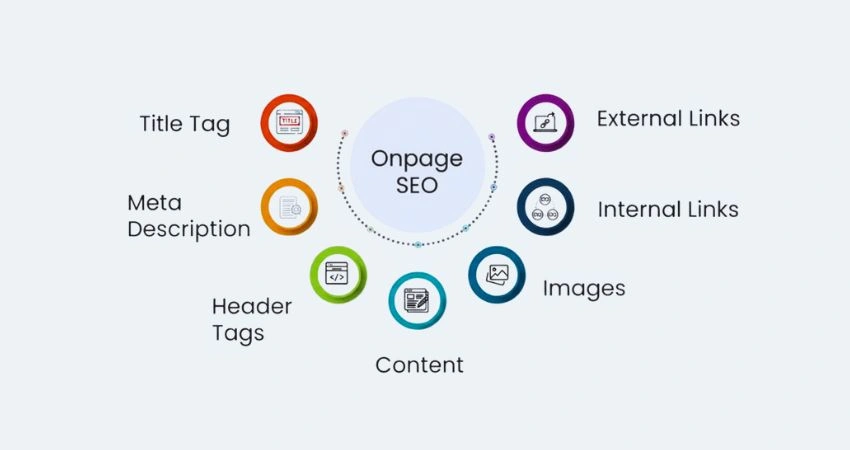
Once your content structure and topic clusters are ready, the next crucial step is optimizing your on-page elements. These are the parts of your website that directly influence how search engines understand and rank your pages.
Effective on-page SEO ensures that your content is not only valuable to readers but also technically optimized for search visibility.
1. Title Tag
The title tag is one of the most powerful ranking signals for a webpage.
- Always include your primary keyword near the beginning of the title.
- Keep it under 60 characters to prevent truncation in search results.
- Make it descriptive, engaging, and relevant to your audience.
Example: How to Get Certified in Phlebotomy in the UK | Step-by-Step Guide
This title is clear, keyword-rich, and instantly tells the reader what to expect.
2. Meta Description
The meta description doesn’t directly impact rankings, but it greatly affects click-through rates (CTR) which in turn signals relevance to Google.
- Keep it between 155–160 characters.
- Use actionable words like “learn,” “discover,” or “get started.”
- Summarize the page’s value or benefit clearly.
Example: Learn the steps to become a certified phlebotomist in the UK – from training programs to real-world experience and certification options.
This meta description motivates readers to click while summarizing the content effectively.
3. Header Tags (H1–H6)
Headers (H1, H2, H3, etc.) give your page structure and help both readers and search engines understand your hierarchy of information.
- H1 should be used once for the main title (usually your blog title).
- H2 and H3 are for organizing sections and subsections.
- Avoid keyword stuffing instead, use variations or related terms naturally.
Well-structured headers improve readability, encourage skimming, and help Google grasp the main topics on your page.
Keyword Placement (Without Stuffing)
Keyword placement is about strategic positioning, not repetition. Search engines are smarter now. So they understand context and intent, not just exact matches.
Here’s how to use your primary keyword effectively:
- In the title tag
- Within the first 100 words of your article
- In one subheading (H2 or H3)
- In the meta description
- In at least one image’s alt text
Then sprinkle secondary and semantic keywords (related phrases) naturally throughout the content.
Pro Tip: Focus on clarity, flow, and reader engagement rather than keyword frequency. A well-written, informative article often performs better than one overloaded with keywords.
Internal Linking Strategies
Internal linking is one of the most underrated yet powerful SEO tactics. It connects your content pieces and helps both users and search engines navigate your website effectively.
Best Practices:
Link from supporting articles to your main pillar pages. This strengthens authority for your core topics.
Use descriptive anchor text (e.g., “learn phlebotomy basics” instead of “click here”).
Link between related posts within the same category or silo.
Avoid overlinking – only add links that provide contextual value to the reader.
This strategy improves crawlability, topical relevance, and user experience, while also distributing page authority across your website.
On-page optimization is the foundation of long-term SEO success. When every element from titles to links is aligned with user intent and structured properly.
Your website becomes easier for search engines to rank and for visitors to explore.
Content Types for Different Websites
Each type of website requires a different approach to content creation. Here’s how to tailor it:
Blog/News Websites
- Focus on trending topics, evergreen posts, and how-to guides.
Example: “Top 10 SEO Trends 2025” or “Phlebotomy Training Explained.”
Affiliate Websites
- Prioritize product reviews, comparisons, and buying guides.
- Use honest, data-backed reviews and include pros/cons.
Example: “Best Keyword Research Tools for Beginners (2025 Edition).”
Business/Service Websites
- Build service pages, case studies, and FAQ sections.
- Optimize for local SEO if your service targets a region.
Example: “Phlebotomy Training in London – NHS Accepted & CPD Certified.”
Multimedia Optimization
Optimized multimedia makes your content engaging and SEO-friendly.
Search engines analyze images and videos to understand context and improve visibility.
Images (Alt Text, Compression)
- Use descriptive alt text (include keywords if relevant).
- Compress images (WebP format recommended).
- Maintain small file sizes to improve site speed.
Videos (Embedding for SEO Benefits)
- Embed videos from YouTube or host them on your server if optimized.
- Add captions and structured data for better indexing.
- Use videos to boost dwell time, which indirectly improves rankings.
Schema Markup
Schema markup helps search engines understand your content and show rich results (stars, FAQs, breadcrumbs).
Adding schema can significantly increase click-through rates.
Article Schema
For blog posts and news content helps Google identify your article type and author.
FAQ Schema
For Q&A sections displays collapsible FAQs directly in search results.
Breadcrumbs Schema
Helps Google and users understand the site hierarchy improves navigation and search visibility.
Final Thoughts
On-Page SEO is the heart of website optimization. It blends creativity with technical precision.
By planning your content structure, optimizing your titles and keywords, linking pages strategically, and enhancing visuals, you’re signaling to Google that your website offers real value.
With On-Page SEO in place, you’re now ready for Step 4 – Off-Page SEO & Link Building, where authority and external credibility take center stage.
[…] Read Full Guide […]